EV Charger & Charging Technology
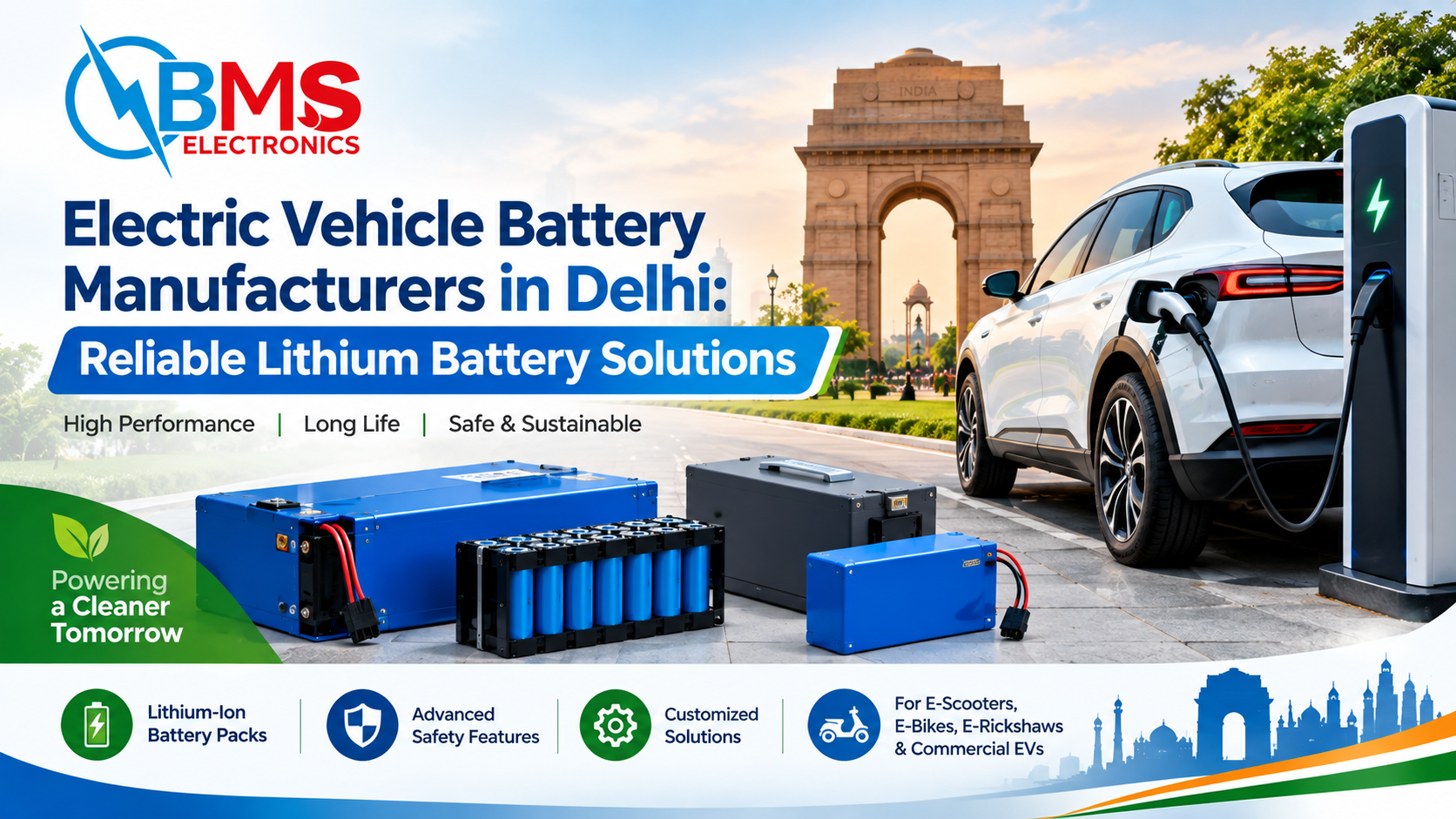
EV Charger & Charging Technology
Electric mobility is growing rapidly, and reliable charging technology is at the centre of this transformation. A high-quality EV charger is not just a power supply device; it is an essential part of the electric vehicle ecosystem that helps ensure safe, stable and efficient battery charging.
At BMS Electronics, we provide advanced EV Charger & Charging Technology solutions for electric two-wheelers, three-wheelers, passenger EVs, commercial vehicles, fleet applications and OEM requirements.
Our focus is on developing charging solutions that match the battery, vehicle and real-world application rather than offering a one-size-fits-all product.
Advanced EV Charging Solutions for Modern Electric Vehicles
Every electric vehicle has different battery and charging requirements. Factors such as battery voltage, battery chemistry, charging current, capacity, charging time and vehicle application can directly affect charger selection.
That is why choosing the right EV charger is important. Our EV chargers are designed to support different electric mobility applications while maintaining reliable power delivery and necessary protection features.
Whether you require chargers for electric scooters, e-rickshaws, commercial EVs or custom vehicle platforms, a suitable charging solution should always be selected according to the technical requirements of the battery and vehicle.
How EV Charging Technology Works
EV charging technology controls how electrical energy is transferred from the power source to an electric vehicle battery.
During charging, the charger regulates voltage and current according to the battery's requirements. In modern EV systems, the charger may also work together with the Battery Management System to monitor charging conditions and help ensure stable battery performance.
A properly designed charging solution helps maintain stable charging voltage, controlled current, reliable battery charging, temperature management and suitable electrical protection.
The aim is not simply to charge the battery quickly. The charger should provide power in a controlled and compatible way so that the entire charging process remains efficient and dependable.
EV Chargers for Different Applications
EV chargers are used across a wide range of electric mobility applications. Electric scooters and electric bikes generally require compact and efficient charging solutions that match the battery pack voltage, chemistry and charging current.
Electric rickshaws and commercial three-wheelers often operate for long hours and therefore require reliable charging that supports regular daily use. A suitable charger can help maintain charging consistency and better vehicle availability.
Commercial electric vehicles have different requirements because charging schedules may directly affect business operations. Fleet operators may need multiple chargers or customised charging solutions based on vehicle usage, battery capacity and available charging time.
Vehicle manufacturers also need chargers that match their specific vehicle and battery platforms. This is where OEM charging solutions become important. A customised charger can be designed according to technical specifications, production requirements and vehicle application.
Lithium-Ion Battery Charger Solutions
Lithium-ion batteries are widely used in modern electric vehicles because of their high energy density, rechargeable performance and compact design.
However, lithium batteries require controlled charging. A suitable lithium-ion battery charger should be selected according to battery chemistry, nominal voltage, maximum charging voltage, charging current, battery capacity and BMS requirements.
Using an unsuitable charger can affect charging performance and battery reliability. This is why charger compatibility should always be considered before selecting a charging system.
BMS Electronics develops charging solutions for different lithium-ion battery configurations used in electric mobility applications.
EV Charger Safety Features
Safety is an important part of EV charging technology. Modern charging systems are designed to respond to different electrical and thermal conditions during charging.
Over-voltage protection helps protect the charger and battery if voltage rises beyond the intended operating range. Over-current protection helps control excessive current conditions that may affect the charging system.
Short-circuit protection provides support during certain electrical fault conditions, while temperature protection helps manage charger operation if the internal temperature becomes too high.
Input protection is also important because the quality and stability of incoming power can influence charger performance.
These safety mechanisms are important for individual EV owners, manufacturers and commercial fleet operators.
Smart EV Charging Technology
EV charging technology is becoming smarter with the integration of monitoring, communication and energy management features.
Modern smart charging systems can help users monitor charging status, track energy consumption, manage power demand, schedule charging and identify certain charger faults.
For fleet operators and commercial businesses, smart charging can be particularly useful because several vehicles may need to charge at the same location.
Instead of allowing every charger to draw maximum power at the same time, intelligent charging systems can help manage available electricity more efficiently.
This makes smart EV charging an important part of the future electric mobility ecosystem.
AC and DC EV Charging
EV charging systems can broadly be divided into AC and DC charging.
AC charging is commonly used in homes, workplaces and locations where vehicles remain parked for longer periods. It is generally suitable for routine charging when extremely fast charging is not necessary.
DC charging is more commonly associated with higher charging power and faster charging applications. It is frequently used at public charging stations, highways, fleet charging facilities and commercial charging hubs.
The right charging method depends on the vehicle, battery system, charging capability and operating requirements.
A higher-power charging system should only be used when the vehicle and battery are designed to support it.
Why Charger Compatibility Matters
A charger should never be selected only on the basis of power rating.
Battery voltage, chemistry, capacity, charging current, charger output voltage, connector configuration, BMS compatibility and vehicle application all play an important role in charger selection.
A charger may appear powerful, but if it does not match the battery configuration, it may not provide the expected charging performance.
Proper compatibility between the charger, battery and vehicle helps maintain stable charging and better overall system performance.
This is especially important for EV manufacturers and businesses developing their own electric vehicle platforms.
EV Charging Solutions for Fleet Operators
EV fleets require reliable and predictable charging because vehicle downtime can directly affect daily business operations.
For delivery companies, logistics operators, passenger transport providers and commercial EV operators, charging schedules need to be planned around vehicle usage.
A properly designed charging setup can help fleet operators improve vehicle availability, manage charging turnaround time and control overall energy use.
Instead of simply choosing the fastest charger available, fleet operators should select charging solutions according to battery capacity, daily travel requirements and available charging time.
This approach can help create a more practical and cost-effective charging infrastructure.
Custom EV Charger Manufacturing
Different EV manufacturers use different battery platforms, vehicle designs and electrical systems. Because of this, one standard charger may not be suitable for every application.
Custom EV charger manufacturing allows charging systems to be developed according to specific technical requirements.
The charger can be designed around required output voltage, charging current, power rating, connector type, enclosure design and other application-specific requirements.
Customisation can be especially useful for EV manufacturers, battery companies, electric mobility startups and businesses that require chargers in bulk quantities.
BMS Electronics supports OEM and bulk charging requirements with solutions developed according to specific electric vehicle applications.
Why Choosing the Right EV Charger Is Important
The best EV charger is not necessarily the charger with the highest power rating.
The right charger is the one that correctly matches the battery, vehicle and intended application.
A suitable charger can provide consistent charging, support battery requirements and improve the overall EV ownership or operating experience.
This is why users and businesses should evaluate technical specifications carefully before selecting a charger.
For OEMs and commercial operators, working with an experienced charging solution provider can also make it easier to develop a system that meets long-term vehicle and battery requirements.
Future of EV Charging Technology
EV charging technology is continuously evolving as electric vehicles become more advanced.
The future of charging is expected to include smarter energy management, connected chargers, remote monitoring, renewable energy integration, intelligent load balancing and improved communication between chargers and vehicle batteries.
Battery swapping may also become useful for certain electric mobility applications where reducing vehicle downtime is important.
As charging infrastructure develops, EV chargers are likely to become more closely connected with broader energy management systems.
This means the EV charger of the future will not simply transfer power. It will become an intelligent part of the vehicle, battery and energy ecosystem.
Get the Right EV Charger for Your Application
Choosing the correct EV charger is an important step in building a reliable electric vehicle system.
Battery voltage, chemistry, charging current, capacity and vehicle application should all be carefully considered before selecting a charging solution.
At BMS Electronics, we provide EV charging and lithium-ion battery charging solutions for individual, commercial and OEM requirements.
Whether the requirement is for an electric two-wheeler, three-wheeler, fleet application or customised EV platform, the right charging solution can help improve reliability, charging performance and overall vehicle usability.
With electric mobility continuing to grow, dependable EV Charger & Charging Technology will remain an essential part of the transition toward cleaner and more efficient transportation.