How to Choose the Right Lithium-Ion Battery Charger for Your Electric Vehicle
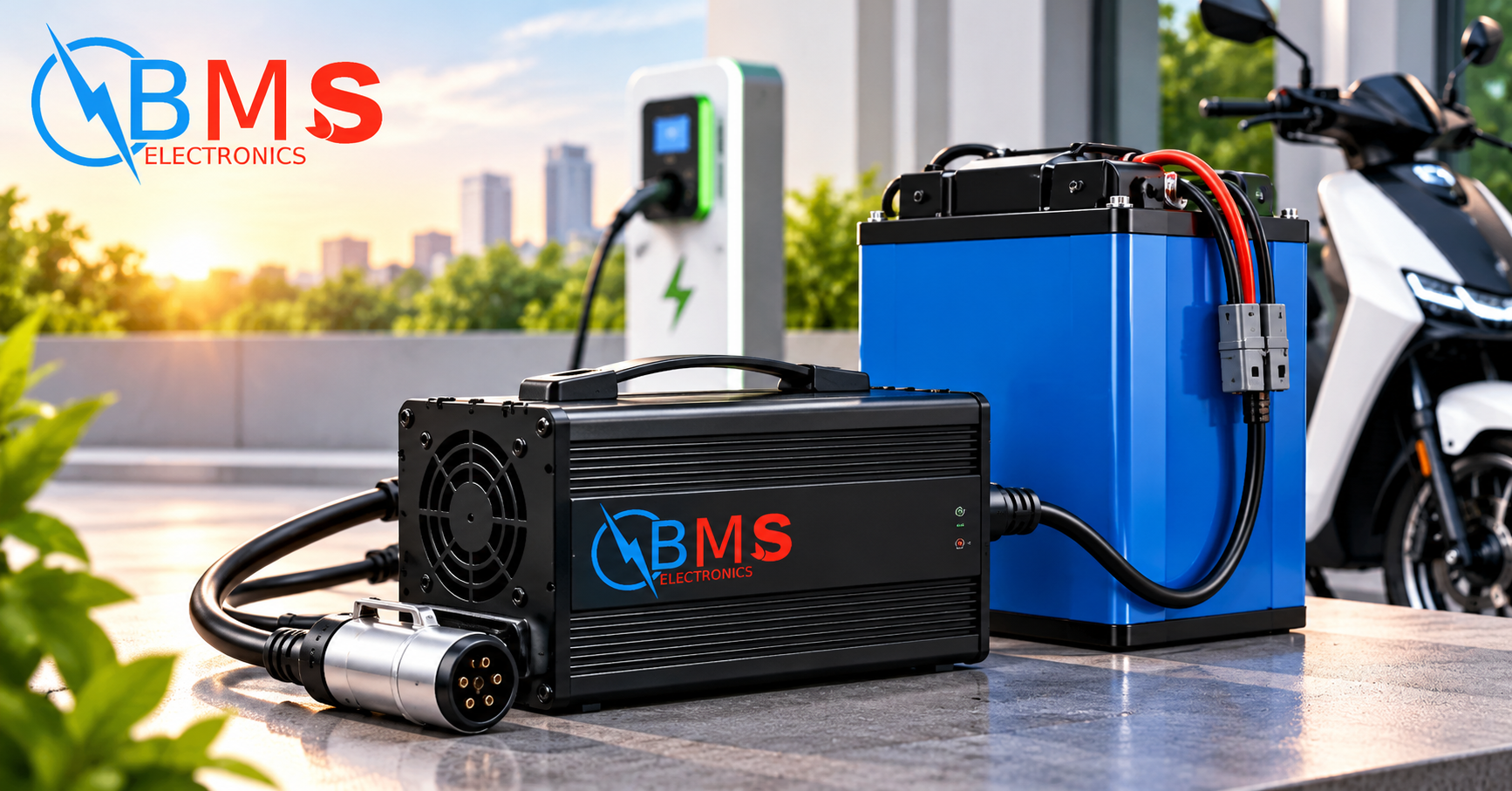
How to Choose the Right Lithium-Ion Battery Charger for Your Electric Vehicle
Choosing the right battery charger is an important part of owning, manufacturing or operating an electric vehicle. Whether you work with electric scooters, e-rickshaws, electric two-wheelers or commercial EV fleets, the charger must match the battery's electrical requirements and the vehicle's intended use.
A charger that looks suitable on paper may not be compatible with every battery pack. Battery chemistry, charging voltage, current, connector type and charging profile all play a role in determining whether a charger is appropriate for a particular application.
For EV manufacturers, distributors and battery users, understanding these basics can make product selection easier and help avoid common compatibility mistakes.
In this guide, we explain what to check before selecting a lithium-ion battery charger, how different specifications affect your decision and what businesses should discuss with a charger manufacturer before placing an order.
What Is a Lithium-Ion Battery Charger?
A lithium-ion battery charger is an electronic device designed to supply electrical energy to a compatible rechargeable battery according to its required charging profile.
Unlike a simple power supply, a properly designed battery charger regulates charging voltage and current according to the battery's chemistry, configuration and operating requirements.
Different lithium battery chemistries can require different charging parameters. For example, lithium iron phosphate (LiFePO4 or LFP) and nickel manganese cobalt (NMC) batteries should not automatically be treated as interchangeable charging systems.
The correct charger depends on the battery manufacturer's specifications and the requirements of the complete battery pack.
Lithium-ion battery chargers are used in various applications, including electric scooters, electric two-wheelers, selected three-wheeler EVs and other battery-powered mobility systems.
How to Choose the Right Lithium-Ion Battery Charger
The best way to select an EV battery charger is to start with the battery specifications rather than choosing a product based only on its price or advertised wattage.
1. Check the Battery Chemistry
The first step is to identify the chemistry of your battery pack.
Common lithium battery types include:
-
LiFePO4 (LFP): Lithium iron phosphate batteries are used in various electric mobility and energy-storage applications.
-
NMC: Nickel manganese cobalt batteries are used in applications where their energy density and other characteristics meet the design requirements.
These chemistries have different charging requirements. A charger designed for one chemistry should not be assumed to work correctly with another.
Before purchasing, confirm the battery chemistry with the battery manufacturer and check that the proposed charger supports the specified charging profile.
2. Match the Charging Voltage
Voltage compatibility is one of the most important considerations when selecting a battery charger.
Check the battery pack's nominal voltage, cell configuration and specified full-charge voltage. Do not assume that a charger's output voltage should simply match the nominal voltage printed on the battery.
For example, a battery pack described by its nominal voltage may require a different voltage at the end of charging. The exact value depends on the battery chemistry and series-cell configuration.
Ask your battery supplier or technical team to confirm the required charging voltage before ordering a charger.
3. Select an Appropriate Charging Current
Charging current affects how quickly a battery can receive energy, but a higher current is not always better.
The permitted charging current depends on the battery cells, battery management system (BMS), thermal conditions and manufacturer specifications.
A charger with excessive current may be unsuitable for a particular battery pack, while an unnecessarily low current may increase charging time.
When comparing chargers, check the specified output current and verify that it falls within the battery manufacturer's permitted charging range.
For fleet operators and EV manufacturers, selecting an appropriate charging current can help balance charging time, battery requirements and day-to-day operating needs.
4. Understand Charger Wattage
Charger wattage describes its power rating. It is commonly calculated from output voltage multiplied by output current.
For example, a charger delivering 60 volts at 5 amps has a nominal output power of 300 watts at that operating point.
However, actual charging power may vary during the charging cycle, and the charger's input power will generally differ from its output power because of conversion losses.
When comparing charger models, evaluate wattage alongside voltage, current, battery compatibility and thermal design rather than treating wattage as the only selection criterion.
5. Check the Connector Type
The physical connector must match the vehicle or battery charging port, including its pin arrangement and electrical ratings.
Different electric vehicles may use different connector types. Even connectors that appear similar can have different pin assignments or intended applications.
Before placing an order, confirm:
-
Connector shape and dimensions.
-
Pin configuration and polarity.
-
Current and voltage ratings.
-
Cable length and mechanical fit.
-
Any communication or control requirements.
If you are an OEM or vehicle manufacturer, provide the connector drawing or sample to the charger supplier wherever possible.
6. Review Protection and Thermal Features
A battery charger should be designed for its intended electrical and operating environment.
Depending on the product, relevant features may include over-voltage protection, over-current protection, short-circuit protection, temperature monitoring and reverse-polarity protection.
Not every charger includes the same protection features, so buyers should review the actual product specification and supporting documentation.
The battery management system also plays an important role in battery protection. However, the presence of a BMS does not eliminate the need for a compatible charger.
For commercial or fleet applications, discuss operating temperature, ventilation, installation conditions and expected charging frequency with the manufacturer.
How Do You Know Whether a Charger Is Compatible With Your Battery?
A charger is suitable only when its specifications match the battery pack's requirements and the intended application.
Before purchasing, confirm the following information:
| Specification | What to verify |
|---|---|
| Battery chemistry | LiFePO4, NMC or another specified chemistry |
| Nominal battery voltage | The pack's rated voltage |
| Full-charge voltage | The battery manufacturer's specified limit |
| Charging current | The permitted charging current for the pack |
| Charger output | Voltage and current ratings under the intended conditions |
| Connector | Correct connector, pin arrangement and polarity |
| Charging profile | Compatibility with the battery chemistry and configuration |
| Protection features | Available protections and relevant documentation |
| Operating environment | Temperature, ventilation and installation requirements |
If any of these details are unclear, ask the battery or charger manufacturer to confirm compatibility before connecting the equipment.
Never choose a charger based solely on a matching connector or a similar nominal voltage.
Common Mistakes to Avoid When Buying an EV Battery Charger
Choosing a Charger Only by Price
A low purchase price does not necessarily mean the charger is the most economical option. Compare specifications, documentation, warranty terms, expected service requirements and suitability for your battery.
Ignoring Battery Chemistry
A charger that supports one lithium chemistry may not provide the correct charging profile for another. Confirm the battery type before selecting a model.
Assuming Higher Current Means Better Performance
Charging current must remain within the battery's permitted limits. Increasing current without verifying compatibility can create safety and reliability risks.
Overlooking Connector Compatibility
A connector that fits physically may still have an incompatible pin arrangement or electrical rating. Confirm the complete connector specification.
Skipping Technical Documentation
Product datasheets help buyers verify voltage range, current, output power, protection features and intended applications. Request the latest documentation when comparing products.
What Should EV Manufacturers and Bulk Buyers Look For?
The needs of an individual vehicle owner may differ from those of an EV manufacturer, distributor or fleet operator.
Businesses purchasing chargers in quantity should consider more than the basic electrical specifications.
Product Consistency
Confirm the agreed model, electrical ratings, connector and revision for repeat orders. Consistent specifications help reduce confusion during assembly, distribution and after-sales support.
OEM and Customisation Requirements
Original equipment manufacturers may need a particular enclosure, connector, cable arrangement, charging profile or product label.
Discuss these requirements with the manufacturer early in the selection process. Any customisation must be checked against the battery and vehicle specifications.
Supply Capacity and Lead Times
Distributors and fleet operators should confirm available quantities, production lead times, order minimums and delivery arrangements before making procurement commitments.
Warranty and Technical Support
Ask how warranty claims are handled, what documentation is supplied and how technical compatibility questions are addressed.
For commercial buyers, clear communication before the purchase can make future procurement and troubleshooting more straightforward.
Lithium-Ion Battery Charging Solutions from BMS Electronics
BMS Electronics Pvt. Ltd. provides EV charging and lithium-ion battery charging solutions for electric mobility applications. Its website lists charger products across different power ratings, including 400W, 1kW and 2kW lithium-ion battery chargers.
The right model depends on the battery chemistry, voltage, current, connector and intended vehicle application. Buyers should therefore review the relevant product documentation instead of assuming that every model is suitable for every EV battery.
If you are sourcing chargers for electric two-wheelers, three-wheelers, OEM production or bulk distribution, discuss your technical requirements with the BMS Electronics team before finalising your selection.
Explore the BMS Electronics website to learn about the company and its charging solutions. You can also review the product range and visit the About Us page for additional company information.
For product-specific questions, bulk enquiries or OEM discussions, contact the team through the BMS Electronics contact page.
Frequently Asked Questions
1. How do I choose a lithium-ion battery charger for an electric vehicle?
Check the battery chemistry, nominal and full-charge voltage, permitted charging current, connector type and required charging profile. Confirm compatibility with the battery manufacturer's specifications before purchasing.
2. Can I use the same charger for LiFePO4 and NMC batteries?
Not automatically. These battery chemistries can have different charging requirements. Use a charger only when its supported charging profile matches the specific battery pack.
3. Does a higher-amp charger charge an EV battery faster?
A higher-current charger may provide faster charging when the battery supports that current. However, the battery cells, BMS, temperature and charging profile can limit the actual charging rate.
4. What is the difference between charger voltage and wattage?
Voltage describes the electrical potential at the charger's output, while wattage describes power. Output power is approximately voltage multiplied by current at a given operating point.
5. What should I check before buying an EV charger in bulk?
Confirm the technical specifications, connector, quality documentation, product consistency, warranty terms, order quantity, delivery schedule and technical support arrangements.
6. Do electric scooters and e-rickshaws use the same battery charger?
Not necessarily. Compatibility depends on battery chemistry, voltage, charging current, connector and charging profile. Always check the battery and vehicle specifications.
7. Where can I find EV battery chargers for business requirements in India?
You can explore the product information available on the BMS Electronics website and contact the company to discuss technical requirements, availability and bulk or OEM enquiries.
Conclusion
Choosing the right lithium-ion battery charger begins with understanding the battery it will charge. Chemistry, voltage, current, wattage, connector compatibility and protection features all need to be considered before making a purchase.
For individual users, checking the battery manufacturer's specifications can help avoid compatibility mistakes. For EV manufacturers, distributors and fleet operators, reviewing product documentation and confirming supply requirements is equally important.
If you are evaluating a charger for an electric vehicle or a commercial application, consult the relevant specifications and discuss your requirements with a qualified supplier. BMS Electronics provides charging solutions for electric mobility applications and can be contacted to discuss suitable product options.